
For the debtor
One guided journey, fewer repeated questions, secure uploads, clear next steps and appointment/signing in the same experience.
FastDox is the intelligent digital front office for Canadian insolvency firms — engaging debtors, collecting evidence, analysing financial information and preparing the file for professional LIT review and downstream administration.
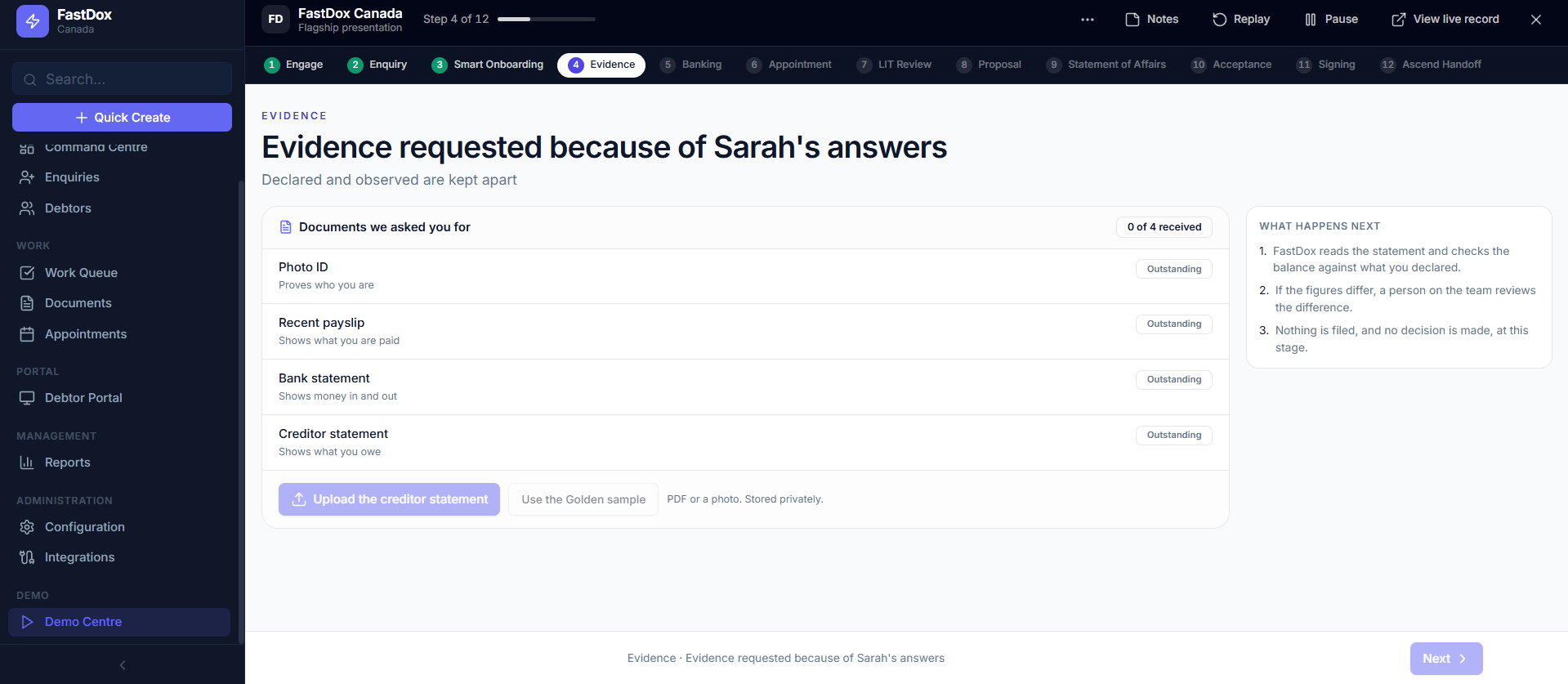
The opportunity is not another form. It is a continuous digital journey that turns what a debtor says into structured, evidenced and reviewable information before a regulated professional needs to make a decision.
One guided journey, fewer repeated questions, secure uploads, clear next steps and appointment/signing in the same experience.
Structured financial data, evidence intelligence, banking observations and exception-led work instead of manual re-keying.
A prepared professional file with provenance, resolved exceptions, solution calculations and the final decision still clearly human.
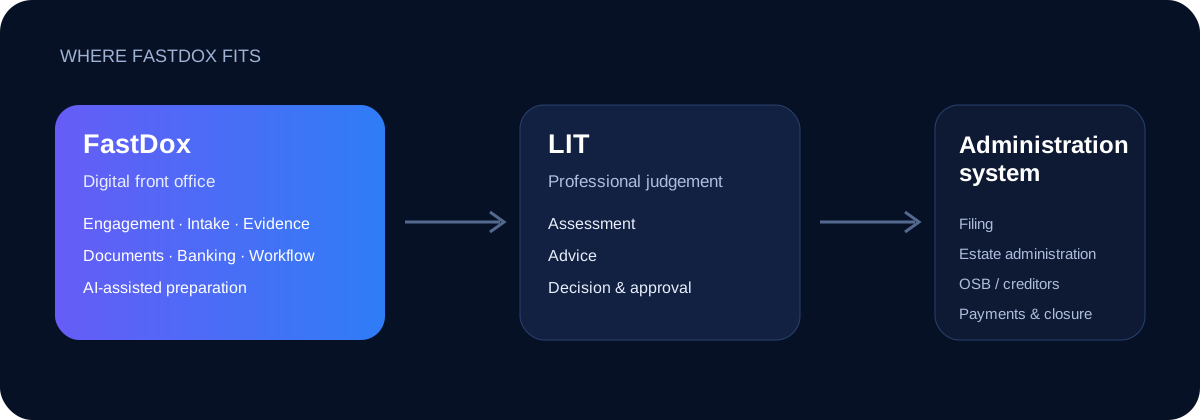
FastDox owns the digital front of the process while preserving the boundaries that matter.
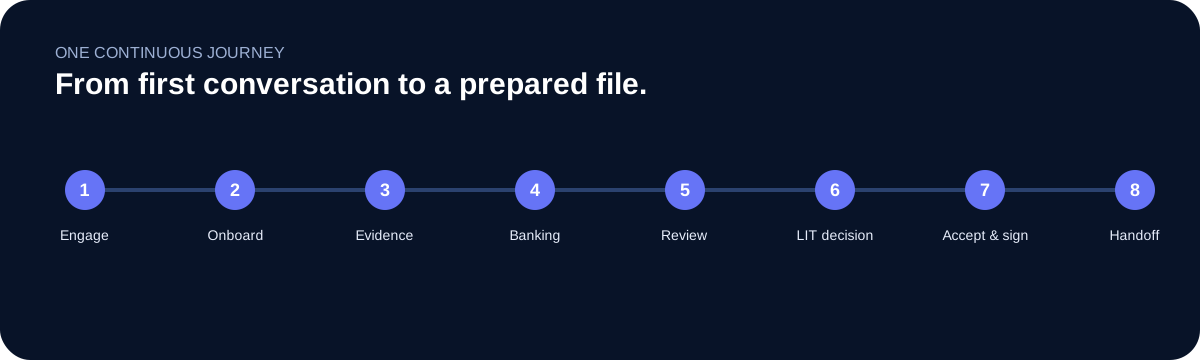
The website is backed by the same end-to-end debtor flow we use in the flagship presentation — not generic mock-ups.
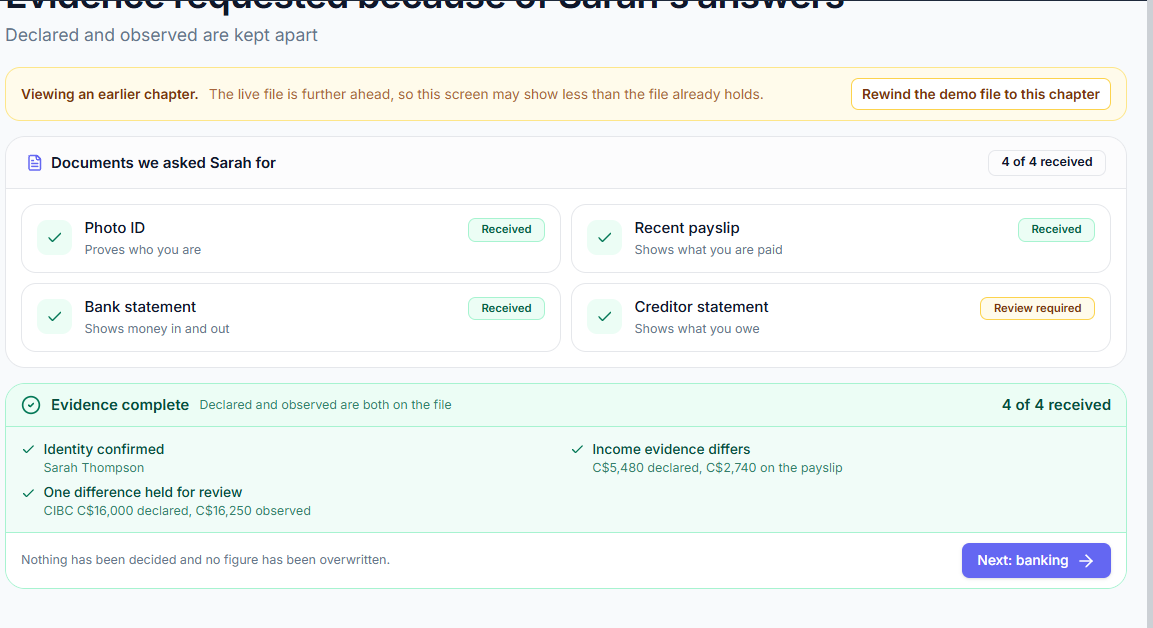
Uploads stay private. FastDox extracts observations, keeps them separate from declared values and routes differences for review.
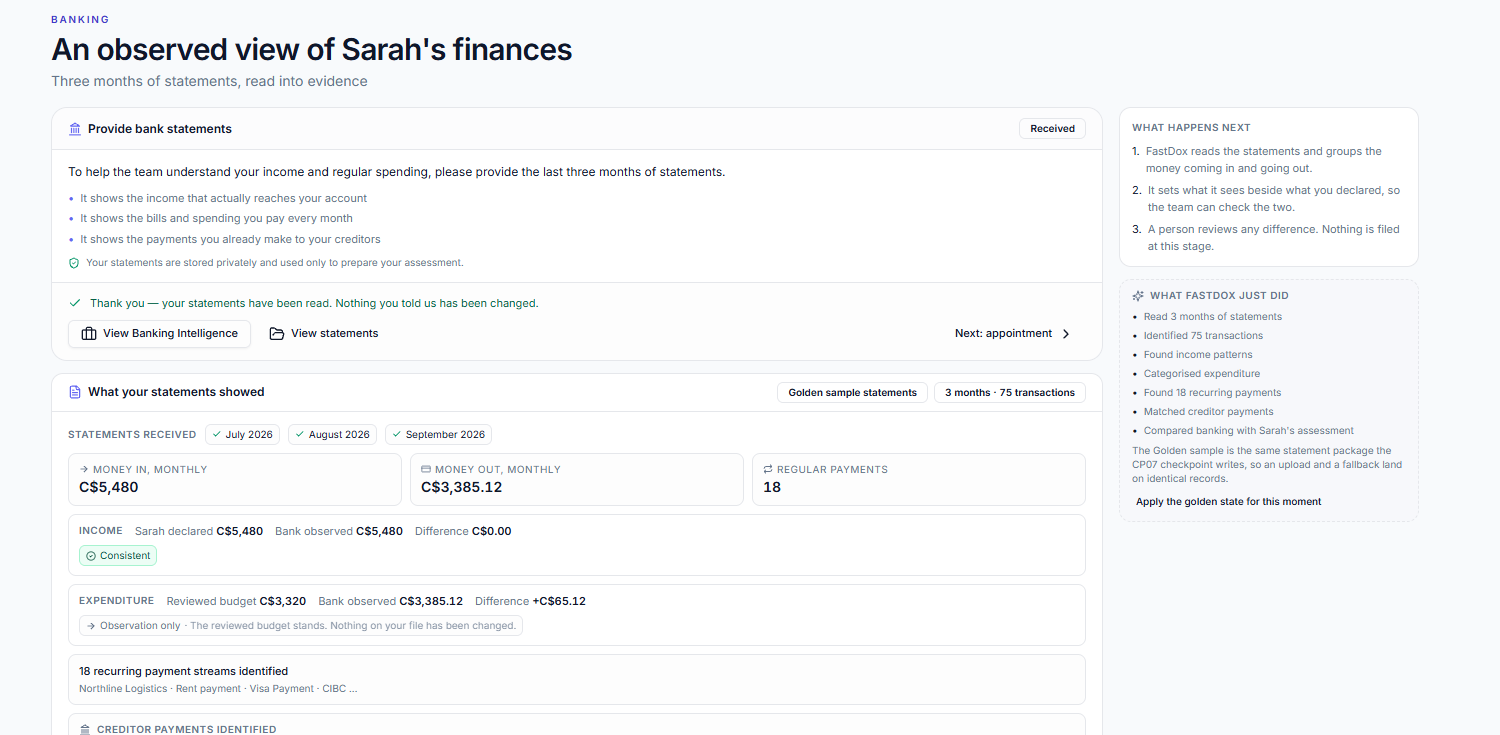
Observed income, expenditure, recurring payments and creditor patterns sit alongside — not on top of — the reviewed assessment.
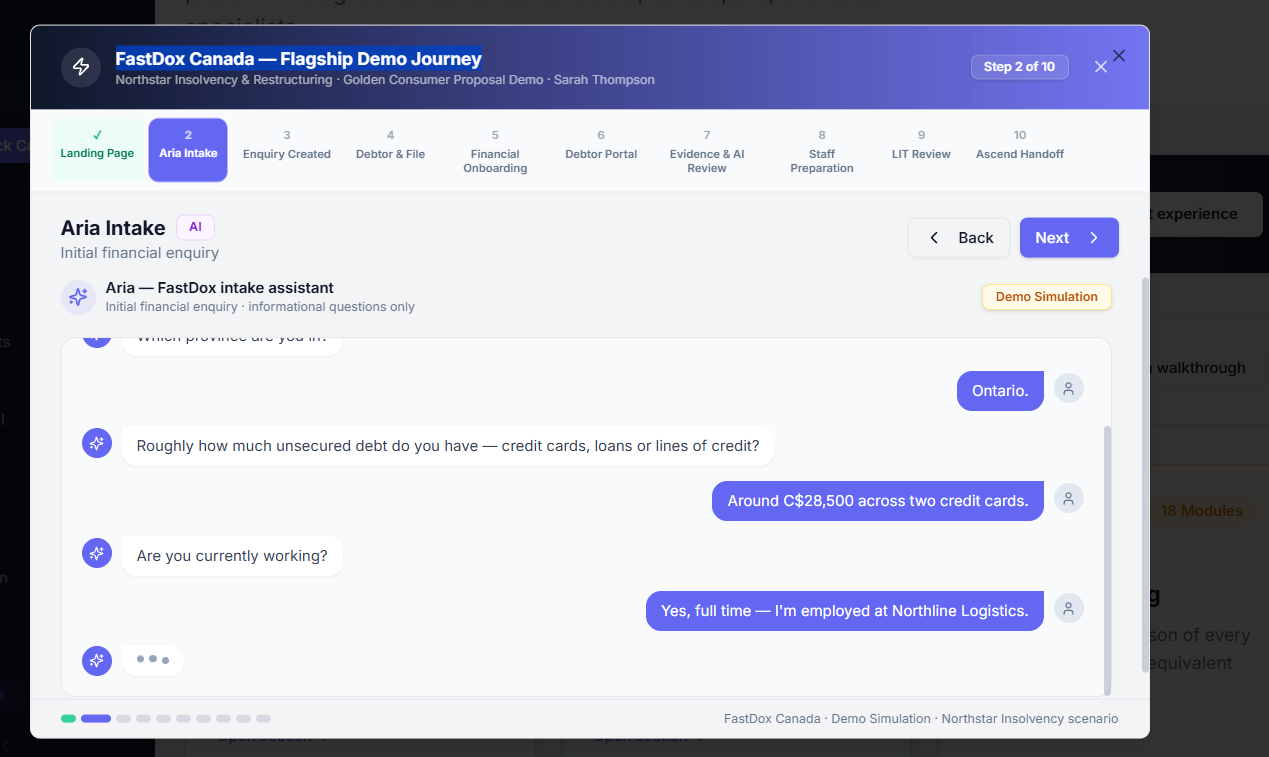
AI engagement, adaptive questions, uploads, appointments and signing all feed the same File.
FastDox is designed to modernise engagement, intake, evidence and preparation — not force a firm to rip out its insolvency administration stack.
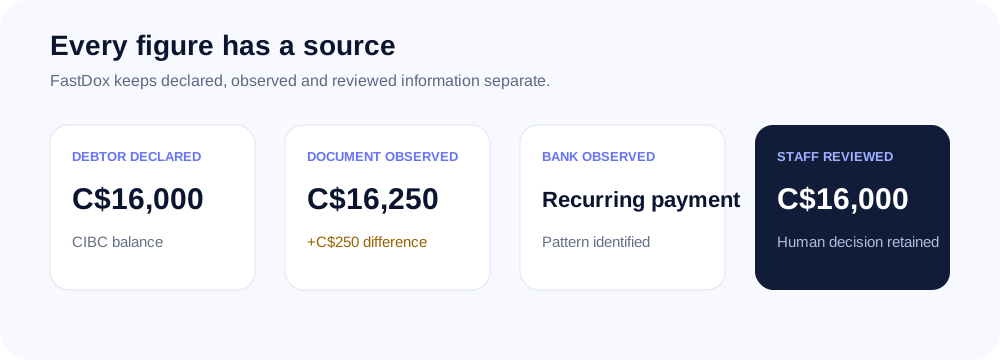
FastDox does not silently replace what a debtor told you when evidence differs. It preserves the source, surfaces the discrepancy and keeps the authoritative review explicit.
Forms, portal tasks, appointments and signatures that respond to the debtor.
Private uploads, classification, extraction and evidence comparison.
Observed income, expenditure, recurring streams and creditor payments.
Grounded file summaries, financial comparison and review-ready outputs.
Tasks, reminders, queues, exceptions and approval boundaries.
Verification steps, audit history and role-aware human review.
APIs and handoff patterns that work with your existing systems.
Private document handling, permissions and auditable operating controls.
In 2025, Canada recorded 140,457 consumer insolvencies and 78.4% were proposals. Firms handling that volume need a better way to prepare files without adding proportionate administrative effort.
Source: Office of the Superintendent of Bankruptcy, Insolvency Statistics in Canada — 2025.
We’ll tailor the walkthrough around your intake, review process and downstream administration system.