
Too much re-keying
Information moves between forms, email, spreadsheets and administration systems instead of building one usable File.
Engage debtors 24/7, build the financial picture, collect and analyse evidence, prepare professional review and hand the structured file downstream — without replacing the systems you already use.
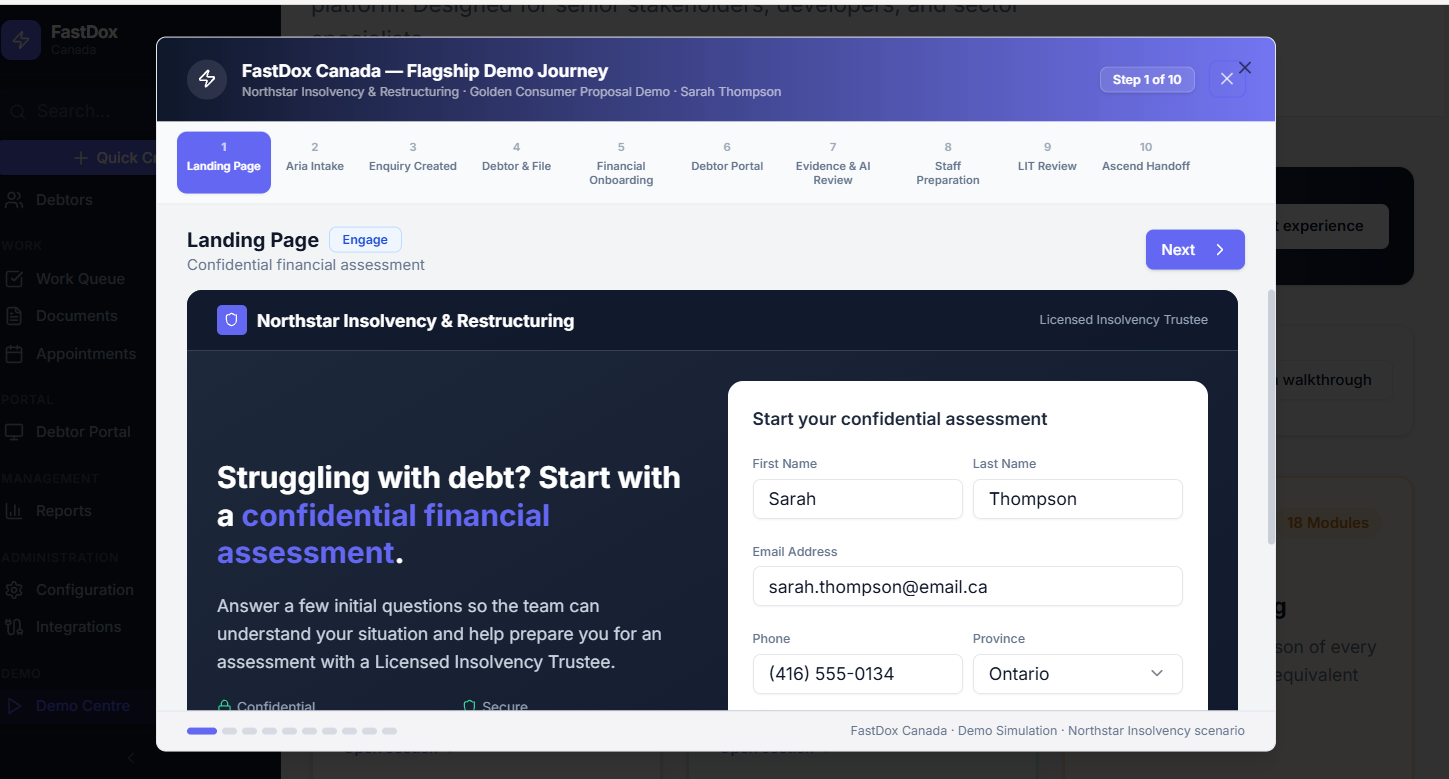
The real work begins after the form: chasing statements, reconciling inconsistent figures, understanding creditors, preparing the file, arranging the assessment and making sure the LIT can see what came from where.
Information moves between forms, email, spreadsheets and administration systems instead of building one usable File.
Evidence, bank statements and missing answers generate manual follow-up that slows conversion and preparation.
A single “current value” hides whether it came from the debtor, a document, banking or a staff review.
AI-assisted chat can capture the reason for contact, debt estimate and qualifying context while preserving clear advice boundaries.
Income, expenditure, assets, liabilities and household information become records the team can review rather than another PDF.
FastDox compares sources and creates human work where something actually needs attention.
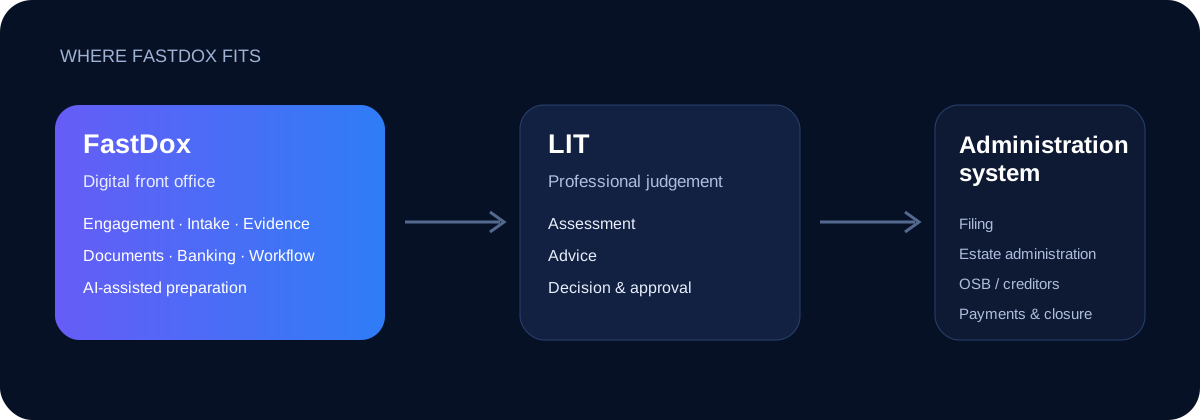
That boundary is deliberate. It lets firms modernise the client experience and preparation layer without turning a transformation project into an estate-management replacement.
AI or web intake captures the problem and creates the enquiry.
Adaptive questions collect the financial and household picture.
Only relevant evidence is requested and stored privately.
Documents and banking create observed information alongside declared values.
Staff resolve exceptions and prepare the professional file.
The LIT sees calculations and evidence, then makes the regulated decision.
SOA/Form 65, acceptance and signature stay distinct.
A readiness-checked package moves downstream for administration.
We can map FastDox around your current LIT workflow, administration environment and client experience.