
Validate income faster
Identify recurring salary and other inflows and compare them with declared or reviewed income.
Read uploaded bank statements — and connected account data where configured — to identify income, expenditure, recurring payments and creditor patterns, then compare those observations with the reviewed financial assessment.
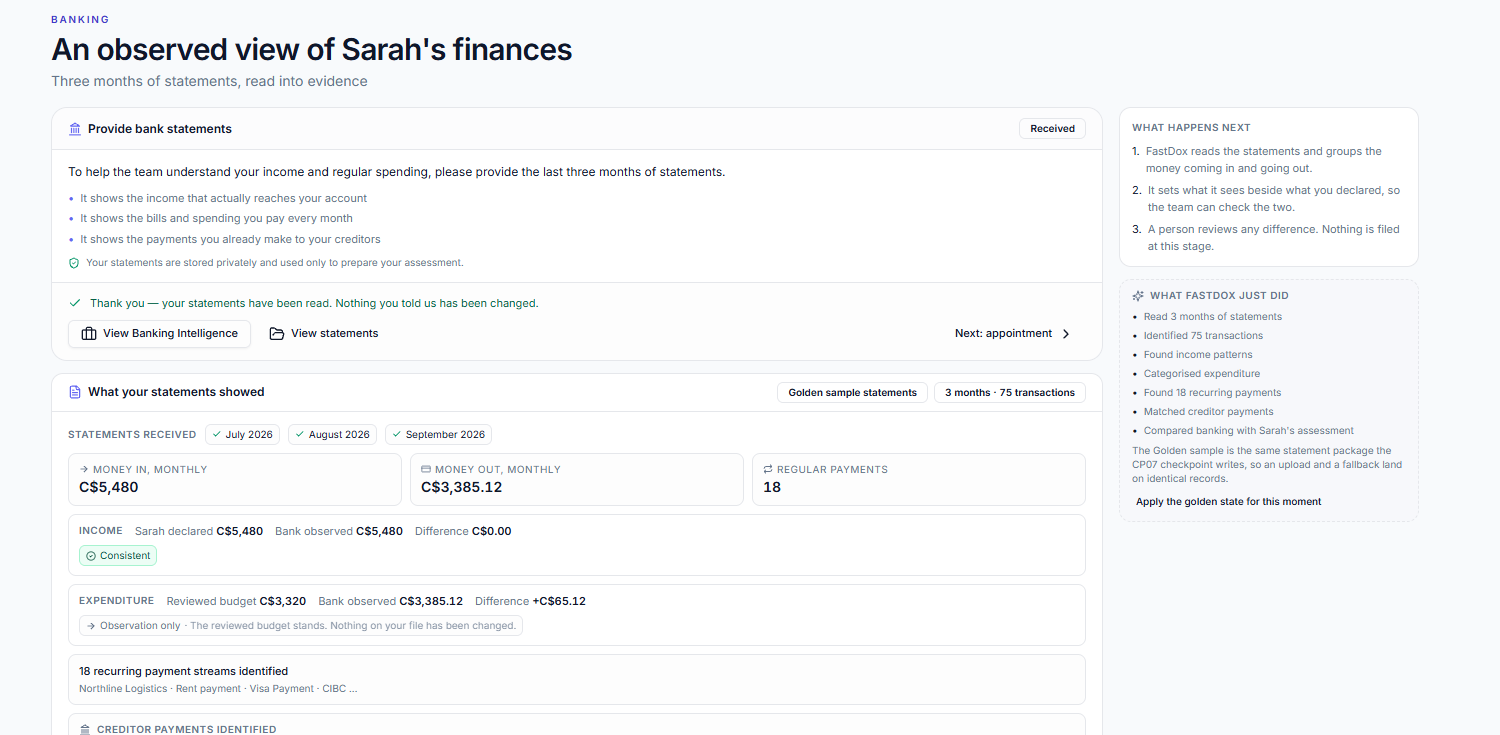
A questionnaire tells you what someone believes their finances look like. Banking evidence helps the team understand what is actually moving through the account and where further review may be needed.
Identify recurring salary and other inflows and compare them with declared or reviewed income.
Group expenditure and recurring commitments without manually reading every transaction line.
Surface repeat creditor payments and payments to lenders already recorded on the File.
Each capability operates against the same record, so information captured at the front of the journey can drive evidence, review, workflow and downstream handoff.
Bring several statement periods into one banking view without turning the File into a raw transaction spreadsheet.
Keep observed expenditure beside the reviewed budget so differences are visible without silently changing the assessment.
Identify repeated merchant, household and debt-servicing patterns across the period.
Keep detailed transactions available for staff when they need to inspect the evidence behind a summary.
The journey is designed so each step creates the state required by the next rather than generating another disconnected document or inbox task.
Upload statements or use a configured banking connection.
Identify statement periods, transactions and account context.
Calculate observed income, spending and recurring payment patterns.
Place banking observations beside declared and reviewed figures for human review.
The objective is not automation for its own sake. FastDox is designed to remove repeatable administration, surface genuine exceptions earlier and give skilled people better-prepared work.
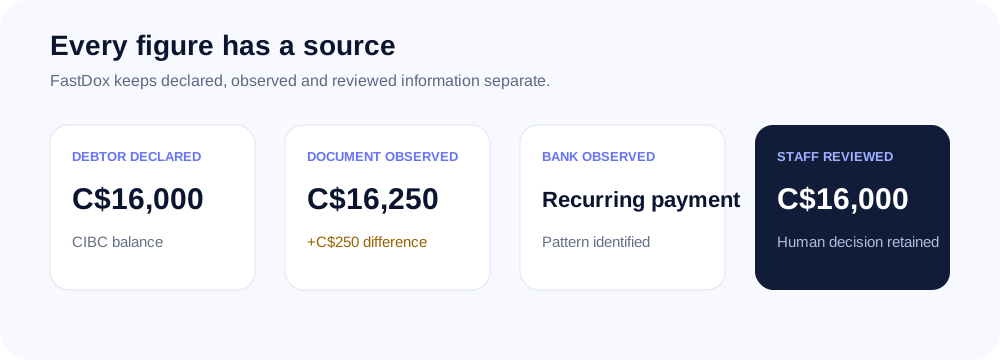
We’ll show how statement analysis can complement your current income-and-expense review without taking the final judgement away from your team.